Budhanilkantha
Location
Budhanilkantha Temple
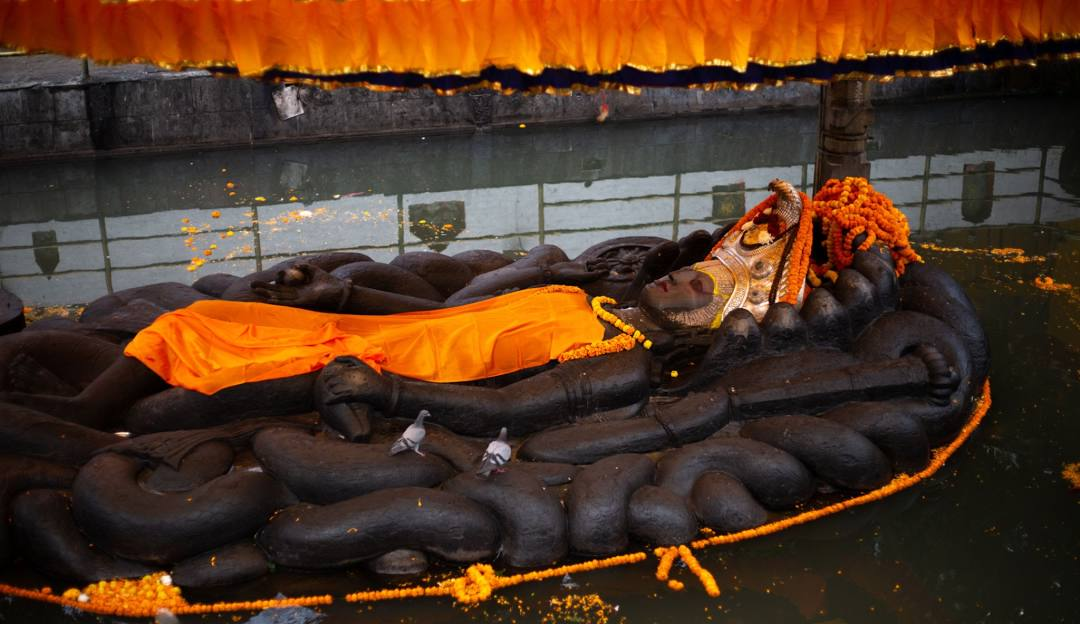
Located at the foot of Shivapuri hill in Kathmandu, Budhanilkantha Temple is an extremely important and ancient religious site in Nepal. It houses a massive and amazing reclining statue of Lord Vishnu, also known by the names 'Narayanthan' or 'Jalashayan Narayan'.
History and Mythological Background
The construction of Budhanilkantha Temple is believed to have taken place around the 5th or 6th century during the Licchavi period. According to the Devmala genealogy, King Vrishabhadaya established it. Although the name of the temple is 'Budhanilkantha' (Old Blue Throat), the main statue here is of Lord Vishnu. It is believed that this name was kept in memory of Shiva, whose throat turned blue after drinking the Kalakuta poison during the churning of the ocean. According to a famous historical legend, a tradition began for the kings of Nepal not to visit this temple after King Pratap Malla received a divine warning in a dream.
Sculpture and Architecture
This statue is 5 meters (17 feet) long and is carved from a single large Black Basalt stone. Lord Vishnu is in a reclining position on the bed of Sheshnag in the middle of a 13-meter long pool. The four-armed Lord holds a conch, discus, mace, and lotus in his four hands.
Worship Method and Festivals
- Daily Worship: Special worship, bath, and Arati are performed by priests daily in the morning and evening. The Lord is decorated daily with sandalwood and flowers, and Malpuwa and fruits are offered as prasad.
- Haribodhini Ekadashi: This is the largest festival here. A huge fair is held here in the month of Kartik to celebrate Lord Vishnu waking up after four months of yogic sleep (Yoganidra).
- Other Festivals: Special fairs are also held here on Harishayani Ekadashi, Mondays of Shrawan, and the New Year in Baisakh.
Budhanilkantha Temple is also a symbol of religious tolerance. Both Hindu and Buddhist followers worship here. Buddhists worship this statue as 'Lokeshvara' (Avalokiteshvara).
Travel Guide: How to Reach
- Location: The temple is situated in Narayanthan, about 8 km north of central Kathmandu (Thamel).
- By Taxi: A 20-40 minute drive from central Kathmandu, depending on traffic.
- By Public Transport: Local micro-buses and vans depart frequently from Ratna Park or Lainchaur. Ask for the "Budhanilkantha" or "Narayanthan" bus.
- By Foot: Many visitors combine the visit with a hike from the nearby Shivapuri Nagarjun National Park entrance.
Best Time to Visit
The best times to visit are Spring (March to May) and Autumn (September to November) for pleasant weather. Early mornings (6:00 AM – 9:00 AM) are best to witness the daily rituals and avoid city crowds. The Haribodhini Ekadashi festival (late October/November) is a particularly vibrant time.
Visitor Information & Tips
- Entry Fee: There is no entry fee for the temple.
- Dress Code: Visitors should dress modestly (shoulders and knees covered).
- Footwear: You must remove your shoes before entering the inner sanctum area near the pond.
- Photography: Photography of the main deity is generally restricted. Please respect any posted signs or verbal instructions from priests.
- Royal History: Historically, the Kings of Nepal were forbidden from visiting this temple due to an ancient prophecy.