Galeshwar Mahadev
Myagdi830mHighly accessible by road; Gateway to MuktinathLord Shiva (Mahadev)
Location
Galeshwar Mahadev
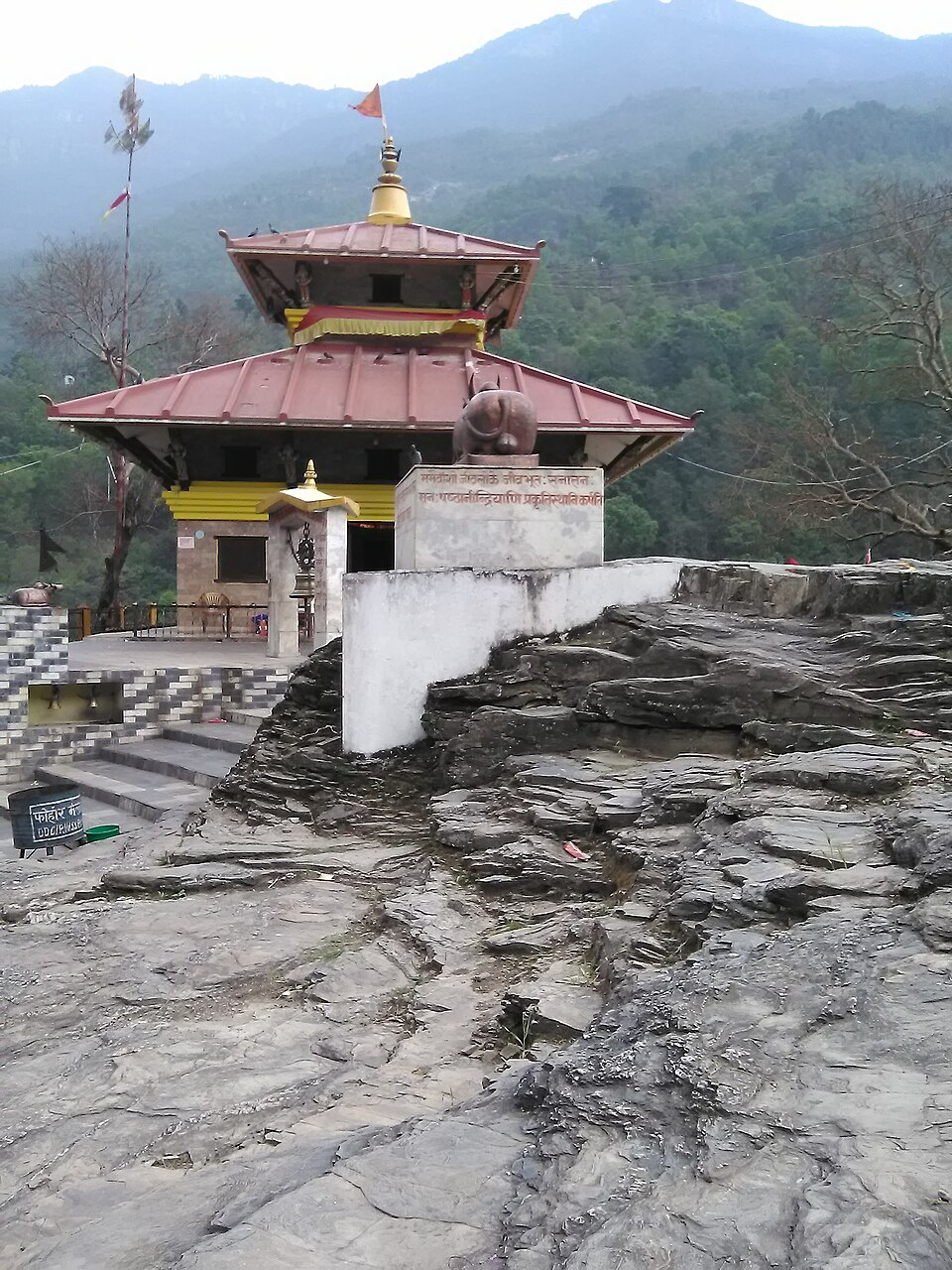
Galeshwar Mahadev Temple is located on top of a single massive stone on the banks of the Kaligandaki River near Beni bazaar in Myagdi district. It is also known as "Second Pashupatinath" and "Gateway to Muktinath". According to the Shiva Purana, it is believed that Sati Devi's throat fell here, which is why it was named Galeshwar.
History and Mythological Belief
The history of Galeshwar Mahadev is rich from both mythological and historical perspectives:
- Fall of Sati Devi's Throat: According to mythology, while Lord Shiva was carrying Sati Devi's dead body, her 'throat' is believed to have fallen in this very place.
- Penance of Jadabharat: According to the Skanda Purana, King Bharat renounced his kingdom and meditated in this place. The 'Jadabharat Cave' located here is considered his penance ground.
- Historical Background: Its modern promotion started after a saint named Galeshwar Baba built a small hut and temple here towards the end of the 19th century. In 1959 BS, King Prithvi Bir Bikram Shah established a Guthi for the management of the temple.
Architecture and Special Structure
The architecture and geographical structure of Galeshwar Temple are considered unique in the world:
- Chakrashila (Single Rock): This temple is located on top of a single massive rock (Chakrashila) spreading over an area of about 9 Ropanis. This grand temple is built on the massive rock without any foundation.
- Jalbarah Kunda: There is a small pond on top of the massive stone, which is called Jalbarah Kunda. The amazing thing is that its water never dries up even in drought and the water level does not increase even in heavy rain.
- 108 Shivalingas and Spouts: 108 Shivalingas have been established in the temple complex. Also, 108 spouts have been made by pumping water from the Kaligandaki, where devotees take baths.
Religious Significance
- Self-manifested Shivalinga: There is a self-manifested Shivalinga in the middle part of the Chakrashila, which is the main deity of worship.
- Shaligram: Since it is on the banks of the Kaligandaki River, plenty of Shaligrams are found here, which are considered a form of Lord Vishnu.
- Major Festivals: A large fair of devotees is held here especially during Shivaratri, Balachaturdashi (Baikuntha Fair), and Mondays of the month of Shrawan.
Travel Guide: How to Reach
- By Road: The temple is just 3 km north of Beni Bazar, the headquarters of Myagdi. It is a 10-15 minute drive or a scenic 30-45 minute walk from Beni.
- From Pokhara: Regular buses and private jeeps run from Pokhara to Beni (approx. 80-90 km, 3-4 hours).
- From Kathmandu: Direct buses are available to Beni, or one can fly to Pokhara and then drive.
- Location: The temple lies directly on the Beni-Jomsom highway, making it a standard stop for pilgrims heading to Muktinath.
Best Time to Visit
- Seasons: Spring (March to May) and Autumn (September to November) offer pleasant weather and clear Himalayan views.
- Religious Festivals: Maha Shivaratri (February/March) and Bala Chaturdashi (November/December) draw thousands of devotees. The Mondays of Shrawan (July/August) are also very popular.
Visitor Information & Tips
- Ease of Access: Unlike many mountain temples, Galeshwar requires very little climbing as it is near the riverbank level, making it accessible for elderly visitors.
- Unique Terrain: Walk upon the massive single rock (Chakrashila) that forms the entire temple foundation.
- Photography: Cameras are generally allowed in the courtyard, but check for restrictions inside the main sanctum.
- Dress Code: Modest clothing is recommended as a sign of respect.
- Shaligrams: Look for sacred Shaligram stones in the nearby Kaligandaki River.