Pashupatinath
Location
Pashupatinath Temple
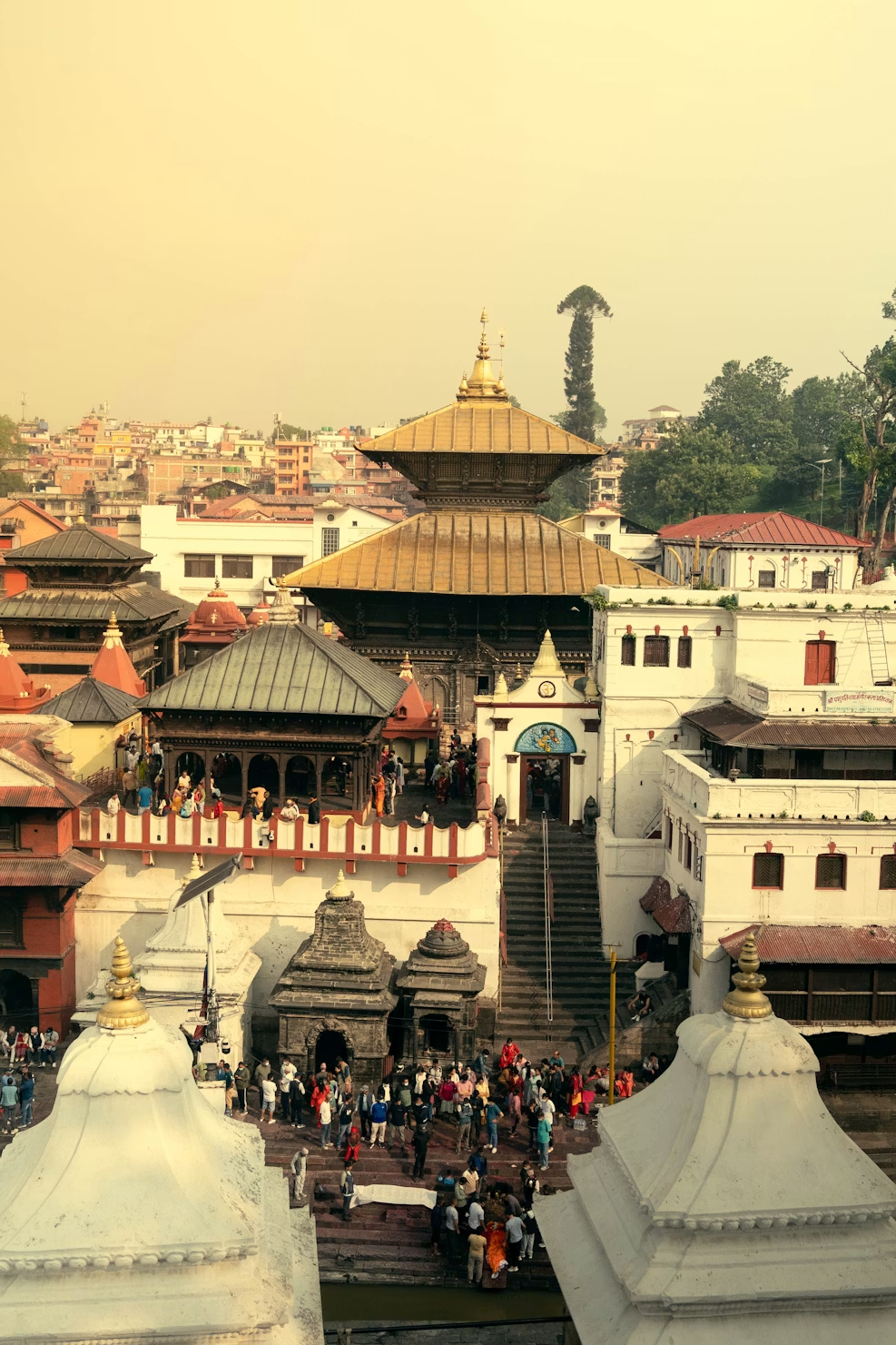
Pashupatinath Temple is one of the most sacred and ancient Hindu temples in Nepal, dedicated to Lord Shiva (Pashupati). It is located on the banks of the Bagmati River in Kathmandu and is a UNESCO World Heritage Site.
Historical and Religious Significance
UNESCO listed it as a World Heritage Site in 1979. It is a major pilgrimage site for Hindus across the world. In the sanctum of the temple is a five-faced Shivalinga. There are more than 500 small temples, ashrams, and Aryaghat (cremation site) in the temple complex. There is a tradition where the main priest (Mula Bhatta) is a Brahmin from South India (Karnataka, Andhra Pradesh or Maharashtra), with Nepali 'Rajbhandaris' assisting them.
History and Legend
There are various mythological stories about the origin of Pashupatinath Temple. According to one belief, Lord Shiva appeared here while wandering in the Shleshmanthaka forest in the form of a deer. Later, it is believed that cowherds found the Jyotirlinga while digging the spot after seeing a Kamadhenu cow offering milk daily on a mound.
Historically, according to the Gopal Banshawali, this temple was built by Licchavi King Supushpa Deva. Some historians also mention that it was built by Prachanda Deva. The current pagoda-style structure of the temple is believed to have been reconstructed in 1692 AD (1749 BS) during the time of King Shivasingh Malla of Kantipur or King Bhupatindra Malla of Bhaktapur.
Architecture
This temple is an excellent example of the Nepalese pagoda style. Its main features are as follows:
- Roof: The two-story roof of the temple is made of copper and is gold-plated.
- Doors: There are grand silver doors in all four directions of the temple, on which artistic patterns are carved.
- Pinnacle and Struts: There is a golden pinnacle (gajur) at the top of the temple, while idols of various gods and goddesses and tantric patterns are very skillfully carved on the struts.
- Nandi: A large golden statue of 'Nandi' (bull), the vehicle of Lord Shiva, is in front of the temple.
Travel Guide: How to Reach
Pashupatinath is centrally located in Kathmandu, making it highly accessible:
- By Air: The temple is just 2–3 km (10–15 minutes) from Tribhuvan International Airport (TIA). Taxis are readily available at the airport.
- By Taxi/Private Car: From tourist hubs like Thamel or Kathmandu Durbar Square, it is about 5 km (20–30 minutes depending on traffic).
- By Public Transport: Local buses and micro-buses heading to Gaushala stop near the temple entrance.
- Walking: If visiting the Boudhanath Stupa, Pashupatinath is a pleasant 20–30 minute walk away.
Best Time to Visit
- Seasons: Autumn (Sept–Nov) and Spring (March–May) offer the best weather for sightseeing.
- Daily Timing:
- Early Morning (4:00 AM – 7:00 AM): To witness the morning rituals and avoid crowds.
- Evening (5:30 PM – 7:30 PM): To see the famous Bagmati Ganga Aarti on the riverbanks.
- Major Festivals:
- Maha Shivaratri (Feb/March): The grandest celebration; vibrant but extremely crowded.
- Teej (Aug/Sept): Thousands of women in red sarees visit to pray for their husbands' longevity.
Visitor Information
- Entry Fees:
- Foreigners: ~NPR 1,000.
- SAARC/Indian Citizens: Entry is usually free (bring ID), but certain areas may have restrictions.
- Dress Code: Modest clothing is required (shoulders and knees covered). Leather items (belts, bags) are often restricted inside the main temple.
- Entry Restrictions: Non-Hindus are prohibited from entering the inner sanctum but are welcome to explore the vast outer complex and view the temple from across the river.