Tilaurakot
Location
Tilaurakot
Located on the banks of the Banganga River in Kapilvastu district, Tilaurakot is the capital of the ancient Shakya republic and the palace area where Lord Gautam Buddha (Prince Siddhartha) spent the initial 29 years of his life. It is an extremely important historical and archaeological pilgrimage site.
Historical Background and Siddhartha Gautama
Historical facts have confirmed that Tilaurakot itself is ancient Kapilvastu. Siddhartha Gautama spent his life as a luxurious prince in this palace. The main palace of his father King Suddhodhana and mother Queen Maya Devi was in this region. Important events mentioned in the life of Buddha are connected with the soil here.
Mahabhinishkramana Dwara (Eastern Gate)
The most spiritual and famous site of Tilaurakot is its eastern entrance, which is called the 'Mahabhinishkramana Dwara'. At the age of 29, Siddhartha Gautama renounced his palace, family, and kingdom through this gate at midnight to seek liberation from the suffering of the world. Near that gate is also the Kanthak Stupa built in memory of Siddhartha's favorite horse 'Kanthak'.
Archaeological Excavation and Remains
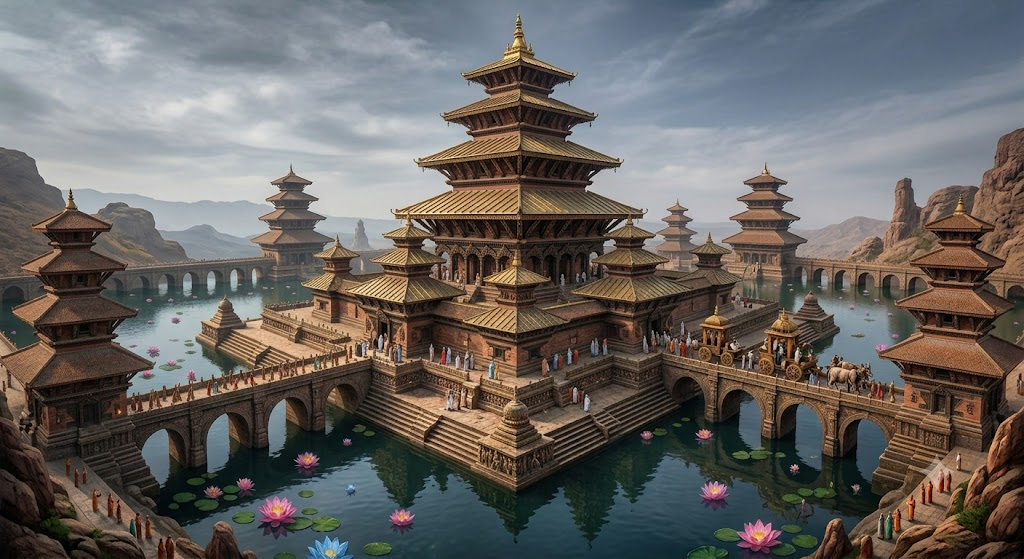
Archaeologist P.C. Mukherji performed the first scientific excavation here in 1899. From the excavation, a massive citadel (Citadel) 500 meters long and 400 meters wide has been found, which was surrounded by a wall and a security moat (Moat) on all sides.
- Central Palace Complex: Ruins of a grand palace have been found in the middle of the city.
- Road and Drainage System: Evidence of a well-organized road network and drainage system of the Buddha period has been found.
- Apsidal Temple: In a recent excavation, ruins of a semi-circular Buddhist temple, considered one of the best in South Asia, have been found.
- Coins and Materials: Maurya-era silver punch-mark coins, terracotta idols, and ancient ornaments have been found here.
Current Importance and UNESCO
The process of listing Tilaurakot in the UNESCO World Heritage List has reached the final stage. This area lies about 27 kilometers north-west of Lumbini. The Samai Mai temple, ancient pond, and remains of the security wall present here tell the glorious story of the Buddha-era civilization.