Alamdevi
Location
Alamdevi
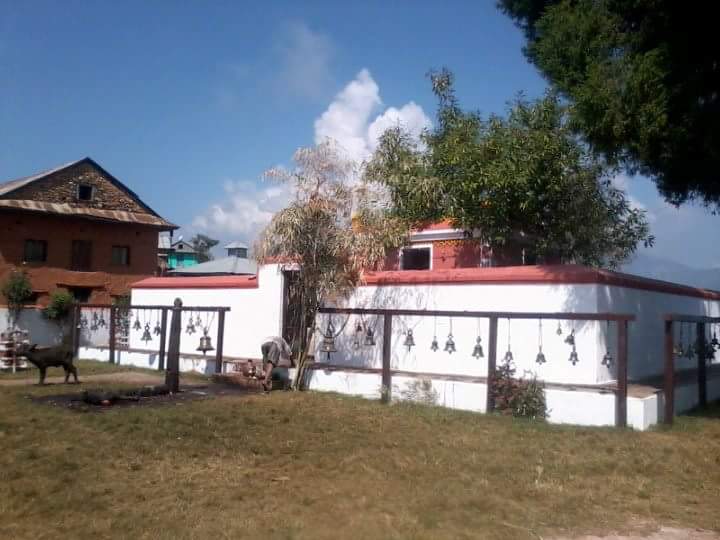
Located on a hilltop on the banks of the Kaligandaki River in Syangja district, Alamdevi Temple is known as the ancestral deity (Kuldevi) of the Shah dynasty. Historically and religiously significant, history shows that the kings of the Shah dynasty used to come to this temple for worship. The peaceful and spiritual environment here attracts devotees.
History
The establishment of the Alamdevi Temple is believed to have been done around 1350 BS by the ancestors of the Shah dynasty. The descendants of Rana Bhupal Singh, who came from Chittorgarh, India, established the Goddess in this location. This temple is worshipped as the ancestral deity (Kul Mandir) of the Shah kings. According to legend, the name Alamdevi was given because the idol initially installed here suddenly disappeared ('Alap').
Architecture and Unique Features
The structure and traditions of Alamdevi Temple are quite distinct and interesting compared to other temples:
- Roofless Temple: This temple is located under the open sky. According to local belief, a roof cannot be maintained here because flames occasionally erupt from the temple.
- Idol-less Worship: There is no metal or stone idol inside the temple. Instead of an idol, there is a medium-sized tree named 'Bhimsen Pati', which is worshipped as the Goddess. The fact that this tree has remained green as it is for hundreds of years is considered a miracle of the Goddess.
- Restricted Entry: Traditionally, entry to the inner part of the temple is prohibited for everyone except Thakuri women. Devotees have the tradition of worshiping and having darshan from the outside.
Traditions and Worship
- Magar Priest: Instead of Brahmin priests, there is a tradition of teenage boys from the Rana Magar community serving as priests. There are strict rules to become a priest: one must be under 15 years old, have completed the Chuda Karma (Bratabandha), and be unmarried.
- Government Panchabali: A grand fair is held here during Maha Ashtami and Navami of Bada Dashain. On the day of Navami, there is a special tradition of offering 'Panchabali' (buffalo, goat, sheep, rooster, and duck) at government expense through the Guthi Sansthan.
- Phulpati Tradition: The historical tradition of sending Dashain Phulpati from here to Hanumandhoka in Kathmandu is still alive. The work of worshiping and beating the Nagara (drums) takes place here 365 days a year.
Travel Guide: How to Reach
- By Air: The nearest airport is Pokhara International Airport. From Pokhara, one can take a bus or hire a taxi to Galyang Bazaar.
- By Road: The temple is located about 80–100 km from Pokhara. Travel via the Siddhartha Highway to Galyang Bazaar. From Galyang, a 15-20 km hilly, winding road leads to the temple. A 4WD vehicle or a sturdy motorcycle is recommended for the final stretch.
- By Public Transport: Regular buses and taxis are available from Pokhara or Butwal to Galyang Bazaar. Local jeeps are commonly available from Galyang to the hilltop.
Best Time to Visit
- Seasons: The best weather and clearest mountain views are during Autumn (September to November) and Spring (March to May).
- Festivals: The temple is busiest during the Bada Dashain festival, especially on Maha Nawami, when a grand fair and special government-sponsored animal sacrifices take place.
Visitor Information & Tips
- Timings: The temple is typically open for devotees from sunrise to sunset (6:00 AM to 6:00 PM).
- Entry Restrictions: Historically, entry into the inner sanctum is restricted to Thakuri women. Most devotees worship from the outer perimeter.
- Local Tips: As the temple is roofless and on a hilltop, carry sun protection. Respect local traditions regarding animal sacrifices and entry restrictions. There are short stone steps to climb to reach the main temple area.