Gosaikunda
Rasuwa4380mChallenging high-altitude trek or helicopter accessLord Shiva
Location
Gosaikunda
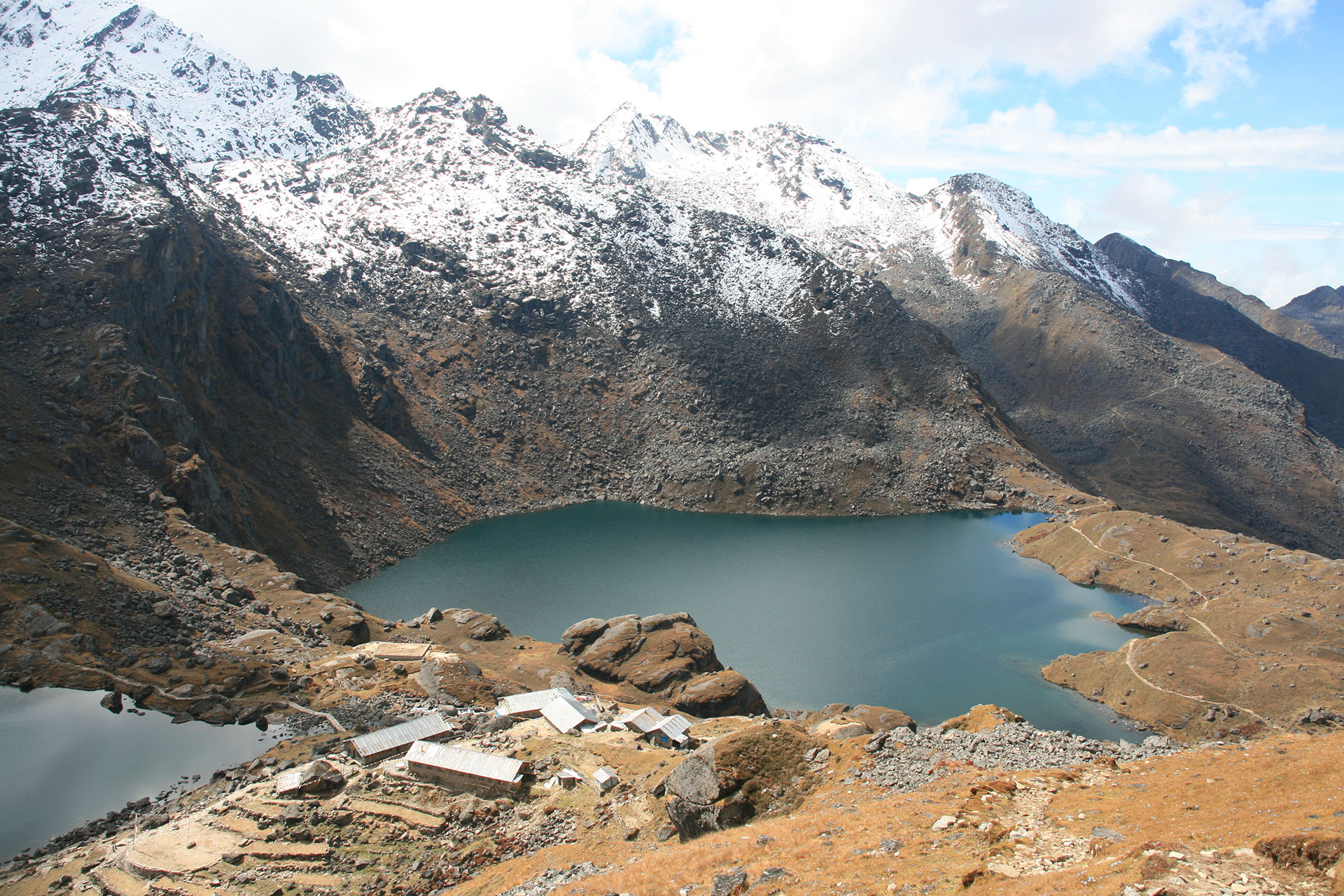
Located at an altitude of 4,380 meters above sea level in Rasuwa district, Gosaikunda is a supremely sacred pilgrimage site for Hindu and Buddhist devotees. It falls within the Langtang National Park of Rasuwa and has also been included in the Ramsar Site, a wetland of international importance.
Mythological Story and Origin
The origin of Gosaikunda is connected with the famous 'Samudra Manthan' (churning of the ocean) of Hinduism:
- Kalakuta Poison and Nilkantha: After the terrifying Kalakuta poison emerged from the churning of the ocean threatened to destroy the world, Lord Shiva himself consumed the poison for the protection of the universe. In search of a cool place to calm the burning sensation of the poison, he reached the Himalayan region.
- Trident Strike: Upon reaching there, it is believed that Gosaikunda was formed from the three water streams that emerged when he struck the mountain with his trident. The large rock in the middle of the lake is still worshipped as the reclining figure of Lord Shiva.
Religious and Historical Significance
- 108 Lakes: It is believed that there are 108 small and large lakes in the Gosaikunda area, of which Bhairavkunda, Saraswatikunda, and Suryakunda are major.
- Relation with Kumbheshwar of Patan: According to popular belief, the water of Gosaikunda flows underground and reaches the pond of Kumbheshwar Mahadev in Patan, Lalitpur. Therefore, it is believed that by bathing there on the day of Janai Purnima, one gets the same merit as Gosaikunda.
- Amar Singh Thapa: The brave warrior of the Anglo-Nepal war, Badakaji Amar Singh Thapa, spent his last days here and breathed his last here. The 'Amar Singh Cave' located here is known in his memory.
Major Fairs and Festivals
- Janai Purnima Fair: This is the largest fair here, held in the month of Shrawan/Bhadra. At this time, thousands of devotees reach here to bathe in the lake and change their sacred threads (janai). The special dance of Shamans (Jhankris) is a center of attraction in the fair.
- Ganga Dashahara: There is a religious belief that 10 types of sins are destroyed by bathing here on the tenth day (Dashami) of the Shukla Paksha of the month of Jestha.
Travel Guide: How to Reach
- Via Dhunche (Most Popular):
- Drive: Take a bus or jeep from Kathmandu (Gongabu/Machhapokhari) to Dhunche (approx. 6-8 hours).
- Trek: A 2-day uphill trek from Dhunche. Common stops include Sing Gompa (Chandanbari) and Lauribina before reaching the lake.
- Via Sundarijal (Helambu Route): A longer, scenic 4-5 day trek starting from Sundarijal (Kathmandu) passing through Chisapani and Thadepati.
- By Helicopter: Helicopter tours are available directly from Kathmandu for those with limited time or physical constraints.
Best Time to Visit
- Spring (March-May): Best for nature; rhododendrons bloom and the weather is stable.
- Autumn (September-November): Offers the clearest skies and best mountain views of Langtang and Ganesh Himal.
- August (Janai Purnima): Peak cultural season, though the monsoon makes trails slippery.
- Winter (December-February): The lake is often frozen, providing a unique but challenging snowy experience.
Visitor Information & Tips
- Altitude Sickness (AMS): The rapid ascent from Dhunche (1,950m) to the lake (4,380m) makes AMS a significant risk. Acclimatize properly and stay hydrated.
- Permits: A Langtang National Park Entry Permit and TIMS card are required (available in Kathmandu or Dhunche).
- Difficulty: Moderate to Strenuous. Proper trekking gear and preparation are essential.
- Accommodation: Basic teahouses and lodges are available along the route. They can be extremely crowded during Janai Purnima.
- Holy Dip: Taking a holy dip in the icy waters of the lake is believed to wash away sins.