Kali Mandir (Biratnagar)
Location
Kali Mandir
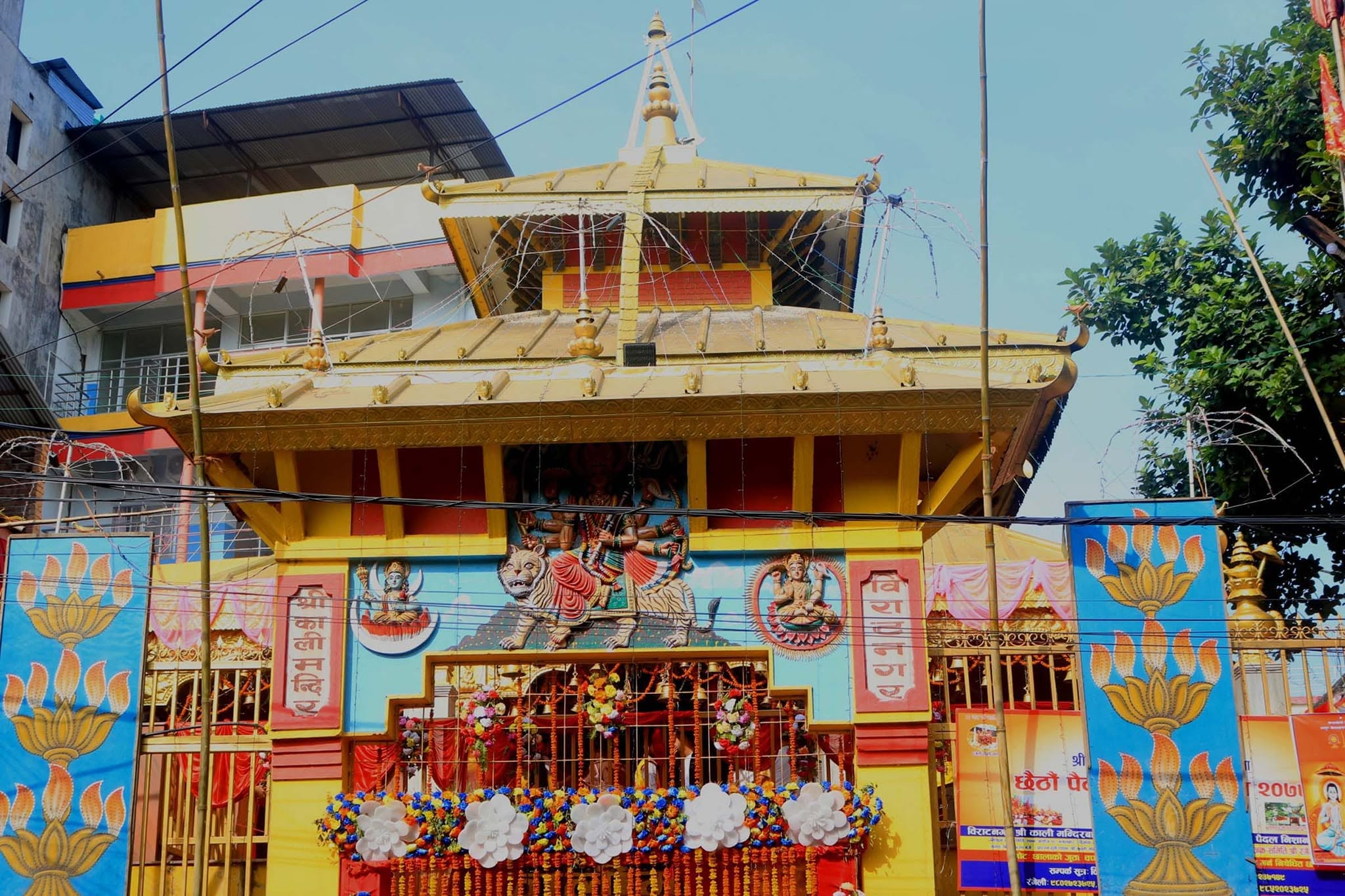
Kali Mandir, located in the heart of the main market of Biratnagar, is the most famous and important Shakti Peetha in Morang district. It is worshipped as the patron goddess of Biratnagar. From historical and cultural perspectives, this temple has become the religious identity of this region.
History
The history of Kali Mandir in Biratnagar is connected with the development of this city:
- Establishment: It is believed that this temple was established around the 1960s BS following the shift of Morang's headquarters from Rangeli to Biratnagar. Initially, this temple was in a simple structure with a small tin roof.
- Reconstruction: In 2000 BS, a devotee had it reconstructed using bricks and lime.
- Current Form: The current grand three-story pagoda-style temple was built in 2053 BS through the active participation of local residents.
Architecture
This temple is built in the traditional Nepali pagoda style. It has three levels of attractive roofs. A new idol of Mother Kali is kept on the upper floor of the temple where daily worship takes place, while the old historical idol is kept safe on the lower floor. Although modern materials (bricks and cement) have been used in the construction of the temple, it reflects a mythological form.
Worship Method and Tradition
Worship and Arati are performed daily in the morning and evening in the temple according to tantric and Vedic methods. Especially on Saturdays and Tuesdays, a large crowd of devotees gathers here. Since it is a Shakti Peetha, there is also a tradition of offering animal sacrifices (goats, ducks, etc.) to fulfill wishes.
Bada Dashain and Fair
During Bada Dashain, this temple becomes the main center of attraction in Biratnagar:
- Nauratha: Jamara is kept here on the day of Ghatasthapana and special recitations of Durga Saptashati (Chandi) are done for nine days.
- Jamara Distribution: There is a special tradition of distributing Jamara to the general public in the temple from early morning on the day of Dashain Tika.
- Fair: Thousands of devotees come to offer sacrifices and visit on the days of Ashtami and Navami. During this time, the temple area is decorated very beautifully with flickering lights and flowers.
Travel Guide: How to Reach
- By Air: Fly to Biratnagar Airport from Kathmandu (35–40 mins). The temple is about 4–5 km from the airport.
- By Road: Long-distance buses run regularly from Kathmandu and other major cities (approx. 10–12 hours).
- Local Transport: The temple is centrally located in the main market. Electric rickshaws and cycle rickshaws are the most convenient ways to reach the temple within the city.
- From India: Biratnagar is near the Jogbani border (Bihar, India). You can cross the border and take a local rickshaw to the city center.
Best Time to Visit
- Dashain Festival (September/October): The most vibrant time to experience the religious fervor and special Navaratri rituals.
- Saturdays & Tuesdays: These are the busiest days for local worshipers.
- Winter (November to March): Ideal for general travel when the weather is cool and dry.
Visitor Information & Tips
- Timing: The temple is typically open from early morning (4:00 AM) to late evening (8:00 PM). Early mornings are best for a peaceful experience.
- Dress Code: Dress modestly as a sign of respect. Remove shoes before entering the main shrine area.
- Photography: While photography of the architecture is generally allowed, avoid taking photos of the main deity inside the sanctum.
- Sacrifices: Be aware that animal sacrifices (goats, ducks, etc.) are a common ritual during major festivals.
- Explore Nearby: The temple is in a bustling market area. Visit the nearby Haat Bazaar for local handicrafts and authentic Nepali street food.