Resunga
GulmiLord Vishnu (Lakshminarayan)
Location
Resunga
Resunga hill, located at the top of Tamghas, the headquarters of Gulmi district, is one of Nepal's most important religious, historical, and tourist sites. This place is situated at an altitude of about 2,340 meters above sea level.
History and Mythology
- Mythological Belief: It is believed that the name 'Resunga' was derived from Sage Rishya Shringa (Rishya Shringa), who performed rigorous penance here in the Treta Yuga. According to the Ramayana, the 'Putreshti Yajna' performed by King Dasharatha of Ayodhya for the birth of children was completed under the leadership of this Sage Rishya Shringa.
- Modern History: In 1940 BS, Yadukananda Swami (Mahaprabhu Lakshminarayan) built the Yajnasala and a supremely sacred pond here. It is said that he brought water from 7 various pilgrimage sites in Nepal and India and mixed it in this pond. This area is also famous as the work-field (karmabhumi) of Saint Shashidhar of the Josmani sect.
Architecture and Structure
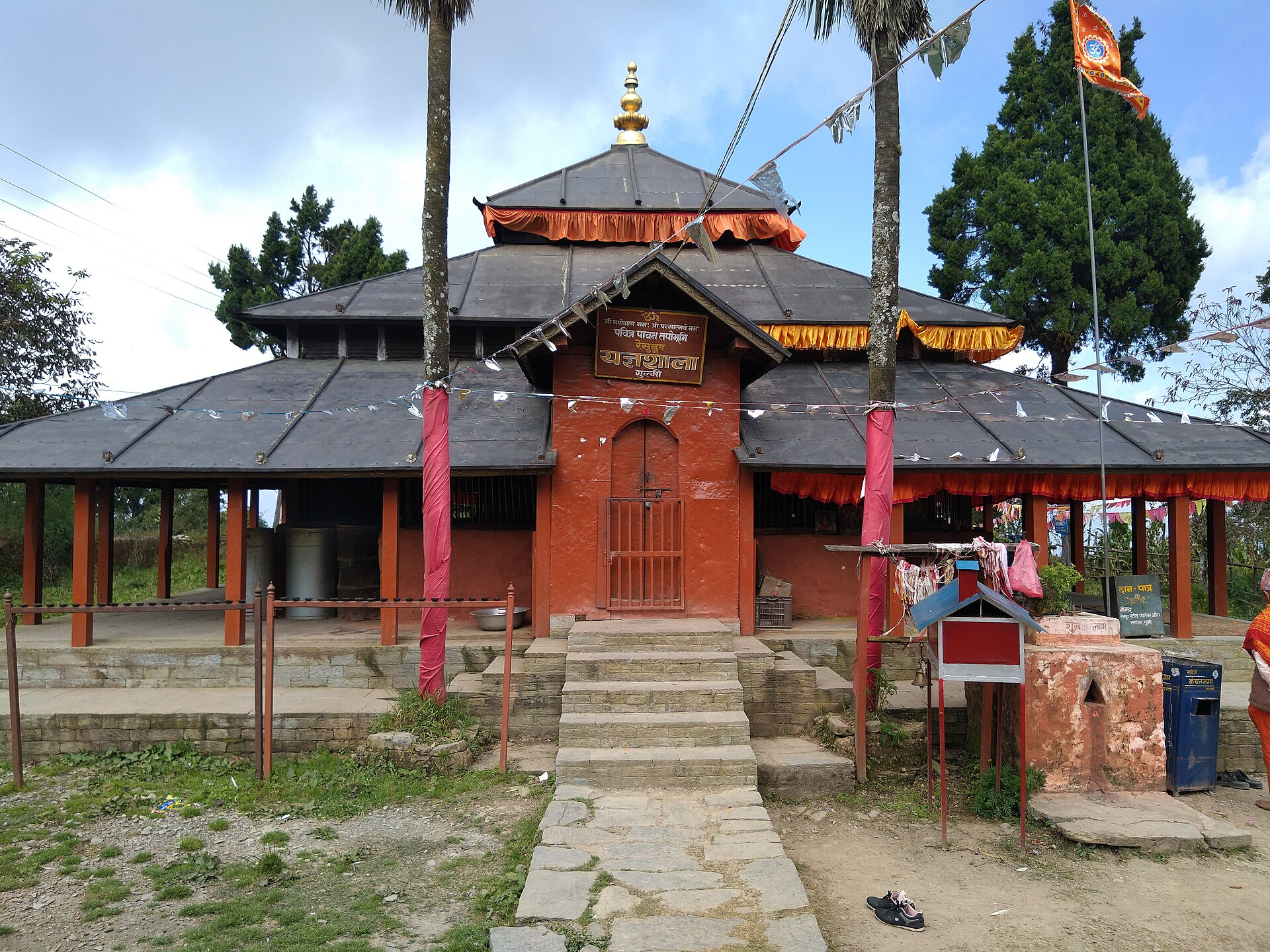
- Pagoda Style: The main temple of Resunga is the Yajnasala, which is built in the traditional Nepali pagoda style. Its roof is made of copper while the pinnacle (gajur) is of gold.
- Temples: There are about 16 small and large temples here, of which Siddhasthan (the oldest), Vishnupaduka, Shivalaya, and Radhakrishna temples are prominent.
- Akhanda Dhuni: An Akhanda Dhuni (continuously burning fire) has been lit inside the Yajnasala since ancient times.
- Mahapokhari: Around the historical Mahapokhari, 27 cow-faced spouts (Gaumukhe Dhara) have been constructed.
Religious Festivals and Fairs
- Shrawan Mela: A grand fair is held in Resunga throughout the month of Shrawan every year. Thousands of devotees reach here to bathe especially on the days of Ekadashi and Aunsi of Shrawan.
- Haribodhini Ekadashi: A large religious festival and fair is held here on the day of Haribodhini Ekadashi in the month of Kartik.
- Worship Method: Devotees first bathe in the Mahapokhari and take water from the Gaumukhe Dhara, and then follow the tradition of visiting Vishnupaduka and other temples.