Khandadevi Temple
Location
Khandadevi Temple
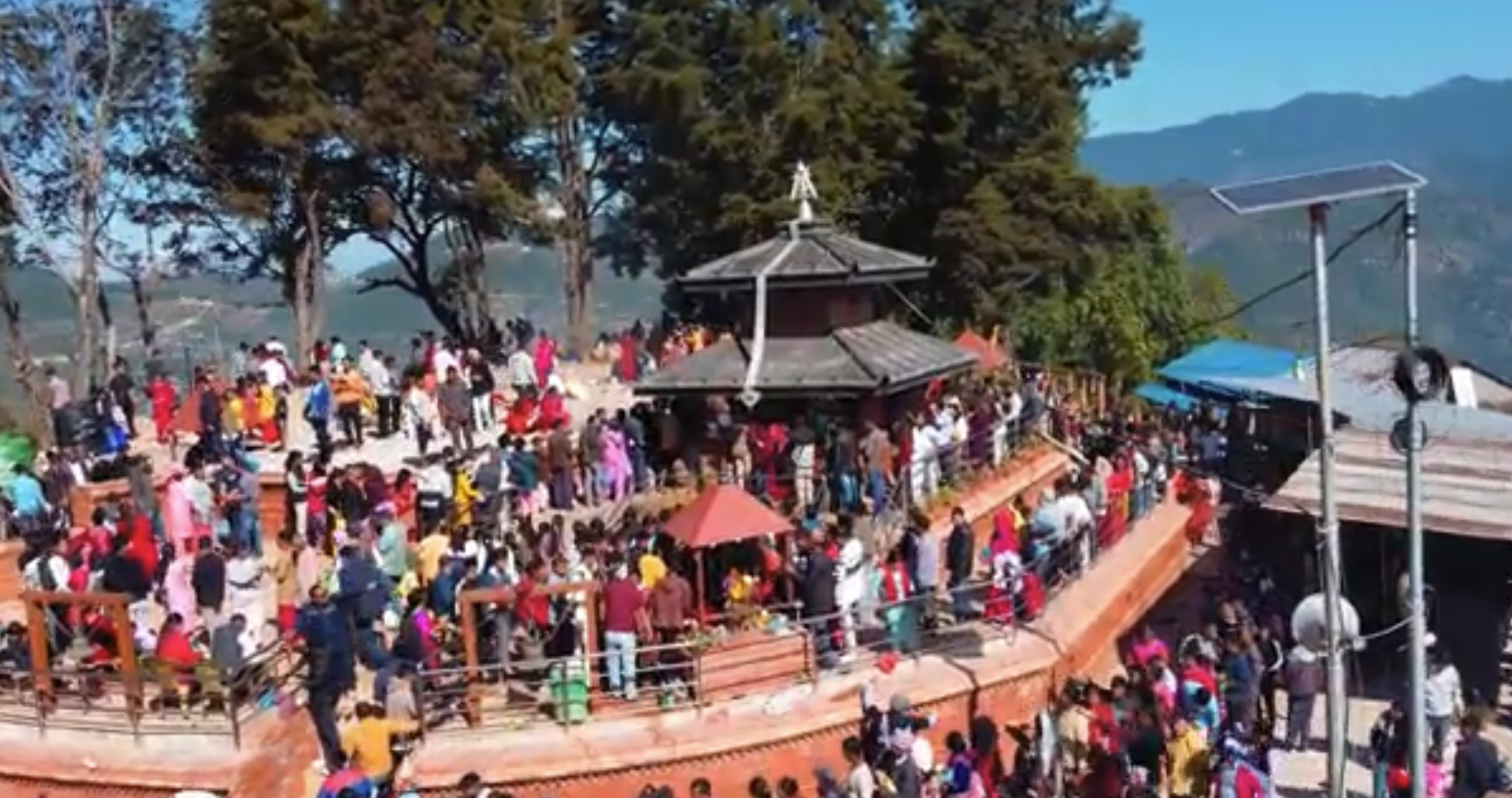
Khandadevi Temple, located in Khandadevi Rural Municipality of Ramechhap district, is an historical and famous Shakti Peetha of Nepal. Located at an altitude of about 1,985 meters above sea level, this temple is famous for natural beauty along with religious faith.
History and Origin
- Mythological Background: It is believed that after Goddess Durga killed the demons Shumbha and Nishumbha, she washed her sword (Khanda) in the 'Durga River' on the banks of Sunkoshi and buried it in this place, due to which its name became 'Khandadevi'.
- Establishment: There is a popular belief that the temple was established here after a cowherd found a stone (Shila) in 1515 BS.
- Prithvi Narayan Shah: There is an historical fact that King Prithvi Narayan Shah took the blessings of Khandadevi to win the battle of Sindhuli Gadhi during the unification of Nepal and built a subsidiary fort (Gadhi) here after victory.
Architecture
This temple is built in the traditional pagoda style. The roof of the temple is of copper and it has artistic wooden struts. There is no idol of the Goddess in the inner sanctum of the temple but an amorphous stone (shapeless stone), which is worshipped as a symbol of power.
Worship Method and Tradition
- Tamang Priest: There is a unique and exemplary tradition of priests from the Tamang community performing worship in this temple.
- Governmental Puja: There is a custom of offering special 'Governmental Puja' and Panchabali here twice a year (Navami of Bada Dashain and Ram Navami of Chaite Dashain).
- Jamare Aunsi: Although the general public keeps Jamara on Ghatasthapana, there is a distinct tradition of keeping Jamara on the day before Ghatasthapana (Jamare Aunsi) in Khandadevi.
Special Festivals and Jatra
Bada Dashain and Chaite Dashain are the main festivals here. A special ritual of 'waking the sword' (worshiping weapons) is also performed here. Since the Pahari community of Gelu considers Khandadevi as their 'daughter', they reach the temple with special gifts on the day of Phulpati.
Travel Guide: How to Reach
- By Road: Regular buses and jeeps depart from Koteshwar, Kathmandu (approx. 4–6 hours) via the BP Highway. From Mulkot or Sitkha, take the local road leading up to the temple.
- By Air: Fly from Kathmandu to Manthali Airport (20–30 mins). From Manthali, the temple is about 20–25 km away and can be reached via a hired taxi or jeep.
- Hiking: For trekking enthusiasts, it is possible to hike up the hill from nearby points in Ramechhap, which takes about 3–4 hours.
Best Time to Visit
- Autumn (September to November) & Spring (March to May): These seasons offer the clearest skies and 360-degree panoramic views of the surrounding valleys and mountains.
- Festivals: Bada Dashain and Chaite Dashain are the most vibrant times, featuring special "Governmental Puja" and religious rituals.
Visitor Information & Tips
- Cultural Tradition: This temple is unique for having priests from the Tamang community. Respect the local customs and rituals.
- Dress Code: Dress modestly and remove your shoes before entering the main temple courtyard.
- Sacrifices: Be prepared to witness animal sacrifices (Panchabali), which are a central part of the worship tradition here.
- Preparation: It can be windy and chilly at the hilltop (1,985m), so carry a light jacket. Bring water and snacks as facilities near the temple are limited.
- History: Explore the ruins of the nearby subsidiary fort (Gadhi) built during the unification of Nepal.