Rishikesh Mandir
PalpaLord Vishnu (Rishikesh)
Location
Rishikesh Mandir
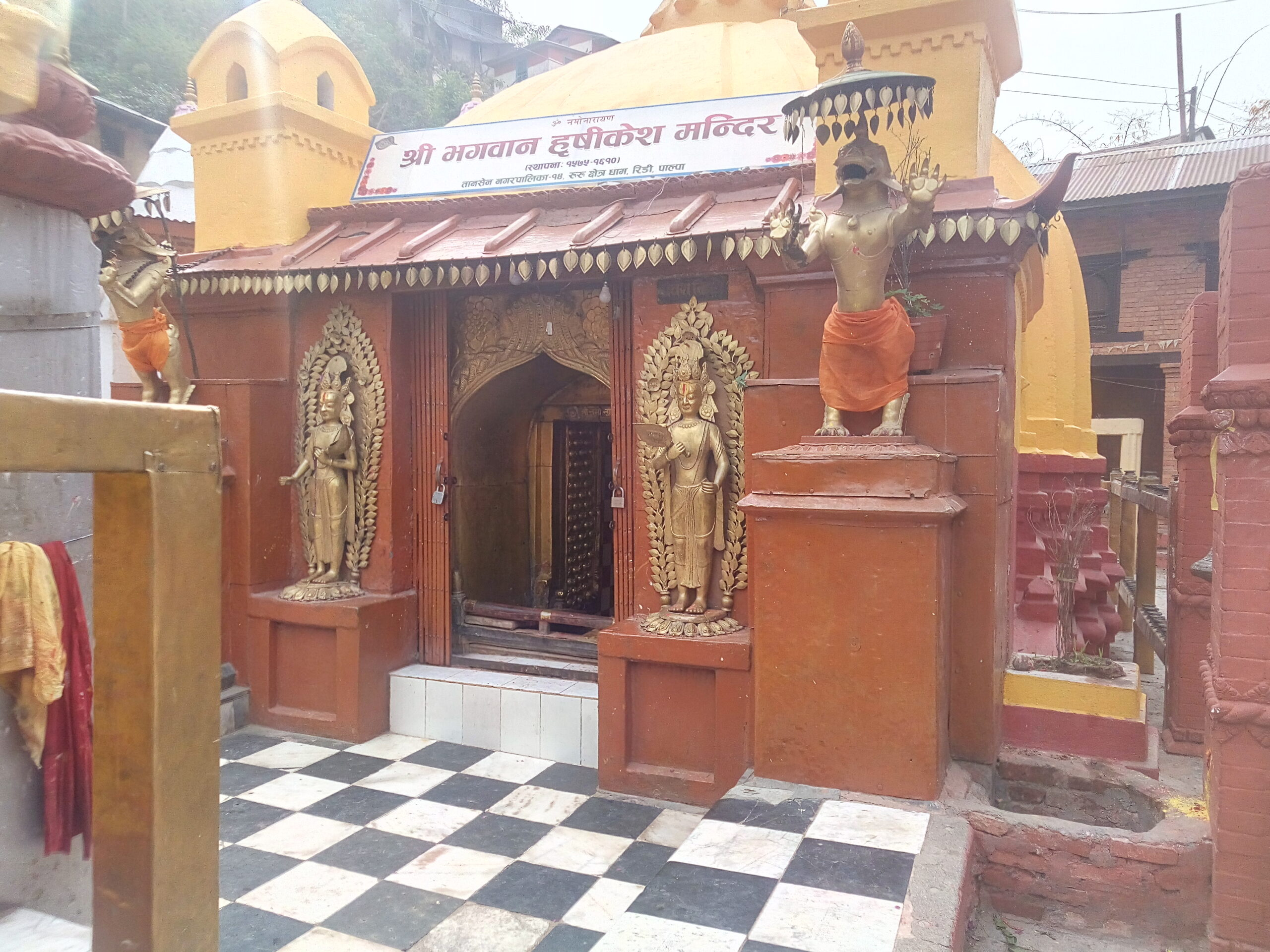
Rishikesh Mandir, located in Ridi (Ruru Kshetra), the confluence of Palpa, Gulmi, and Syangja, is an extremely important religious, historical, and cultural heritage of Nepal. It is considered one of the "Char Dham" of Nepal and has also been placed on the potential list of UNESCO World Heritage Sites due to its historical importance.
History and Mythological Background
- Story of Ruru Kanya: According to mythological belief, Ruru Kanya, the daughter of the Apsara Pramlochana and Sage Bhrigu, performed rigorous penance for Lord Vishnu in this region. Impressed by her devotion, Vishnu appeared in the form of "Rishikesh". According to the wish of Ruru Kanya, it is believed that Lord Vishnu resided here forever in the form of a Shaligram.
- King Mani Mukunda Sen: Historically, the Palpali King Mani Mukunda Sen found the idol of Lord Rishikesh while bathing in the Kaligandaki River, and he built this temple around 1575 BS. The current structure was built by Ranadatta Pande in 1819 BS.
Architecture and Features
- Gumbaj Style: Rishikesh Mandir is mainly built in the Gumbaj Style, in which a beautiful blend of medieval and Sen-era architecture can be seen.
- Main Idol: Inside the temple is a 3 feet 9 inches tall four-armed (Chaturbahu) black stone idol of Lord Vishnu. This idol is considered to have "self-manifested".
- Banaras of Nepal: Ruru Kshetra is also known as the "Banaras of Nepal" because of its religious importance and its location on the banks of the Kaligandaki River. Sacred Shaligrams are found in abundance here.
Festivals and Fairs
- Maghe Sankranti (Ridi Mela): A large fair is held here every year on the occasion of Maghe Sankranti. There is a popular belief that taking a holy bath in the Kaligandaki and visiting Rishikesh leads to salvation (moksha) and the deliverance of ancestors.
- Baisakh Sankranti and Kartik Ekadashi: There is also a large presence of devotees here during these festivals.